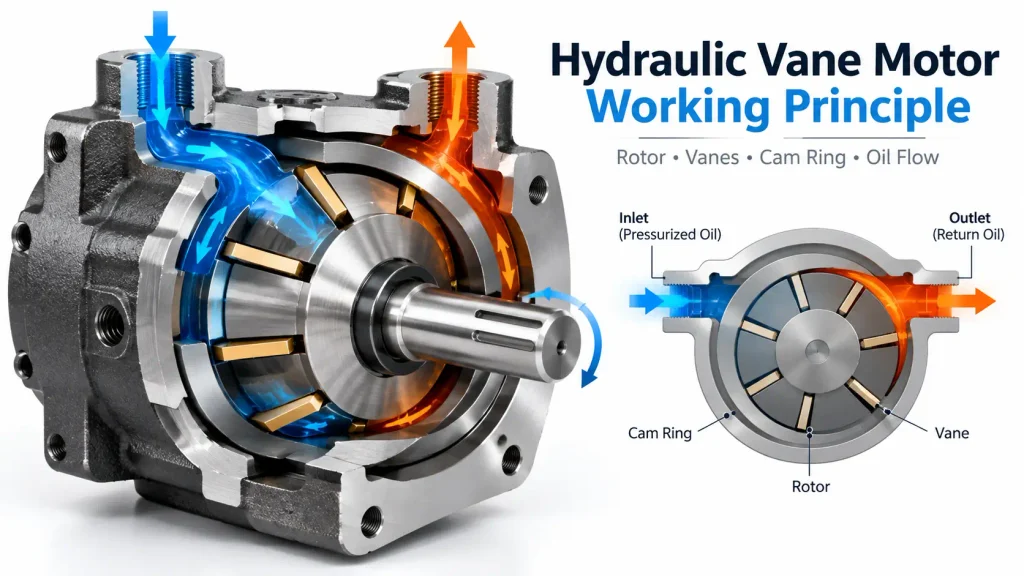
A vane pump is a rotary positive displacement pump that traps and transfers a controlled volume of fluid during each shaft revolution.
A vane pump works by rotating a slotted rotor inside a cam ring or casing. Sliding vanes maintain contact with the inner surface of the casing and form sealed chambers. Because the rotor is positioned off-center, these chambers expand near the inlet to draw fluid into the pump and contract near the outlet to discharge it under pressure.
Understanding this cycle makes it easier to select, operate, and troubleshoot a vane pump correctly.
How Does a Vane Pump Work Step by Step?
- Rotor Rotation
The rotor begins rotating inside the cam-shaped housing. Sliding vanes are installed in slots around the rotor. - Vanes Extend Outward
As the rotor turns, centrifugal force, hydraulic pressure, and push rods help push the vanes outward so they remain in contact with the casing wall. - Fluid Enters the Pump
On the inlet side, the space between adjacent vanes gradually increases. This expanding chamber creates a low-pressure area that draws liquid into the pump. - Fluid Is Carried Around the Housing
The liquid becomes trapped between the vanes, rotor, and casing wall. As the rotor continues to turn, these sealed pockets carry the fluid toward the outlet. - Fluid Is Discharged
Near the outlet, the vanes slide back into the rotor slots and the chamber volume decreases. This forces the trapped liquid out through the discharge port.
What Are the Main Types of Vane Pumps?
Vane pumps can be classified by vane construction, pressure balancing, and whether their displacement is fixed or adjustable.
Each design changes how the pump responds to fluid properties, pressure, contamination, and variations in flow demand.
Sliding Vane Pumps
A sliding vane pump uses rigid vanes that move radially inside rotor slots. The vanes are commonly made from wear-resistant or self-lubricating materials.
Sliding designs are particularly effective for clean, low- to medium-viscosity liquids. The outward movement of the vanes can also compensate for gradual tip wear, helping the pump maintain its seal and performance over time.
Flexible Vane Pumps
In a flexible vane pump, the vanes are part of an elastomeric or flexible impeller. The impeller is slightly compressed as it rotates through the narrow side of the casing and expands again near the inlet.
Flexible vane pumps can handle some soft particles and delicate fluids, depending on vane material and speed. However, chemical compatibility, temperature, and fatigue of the flexible element must be considered.
Balanced and Unbalanced Vane Pumps
An unbalanced vane pump normally has one main inlet zone and one outlet zone. The pressure difference between the two sides creates a radial load on the rotor, shaft, and bearings.
A balanced vane pump uses opposing inlet and outlet zones. Hydraulic forces act in opposite directions and largely cancel one another. This reduces bearing load and makes balanced designs suitable for higher-pressure, continuous-duty operation.
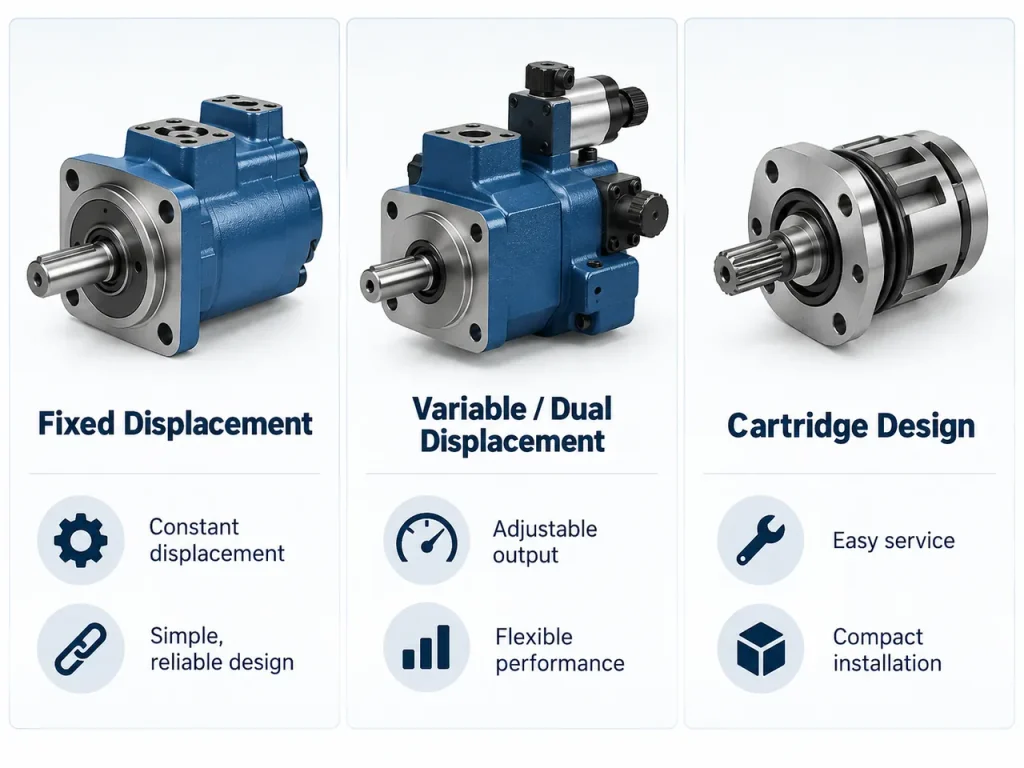
Fixed and Variable Displacement Designs
A fixed-displacement vane pump delivers approximately the same theoretical volume per revolution. Actual output still changes with speed, pressure, fluid condition, and internal leakage.
A variable-displacement vane pump changes the eccentricity between the rotor and cam ring. Increasing the offset increases displacement, while reducing it lowers the amount of fluid delivered per revolution. Pressure-compensated versions can reduce their displacement automatically when system demand falls.
How Much Pressure Can a Vane Pump Produce?
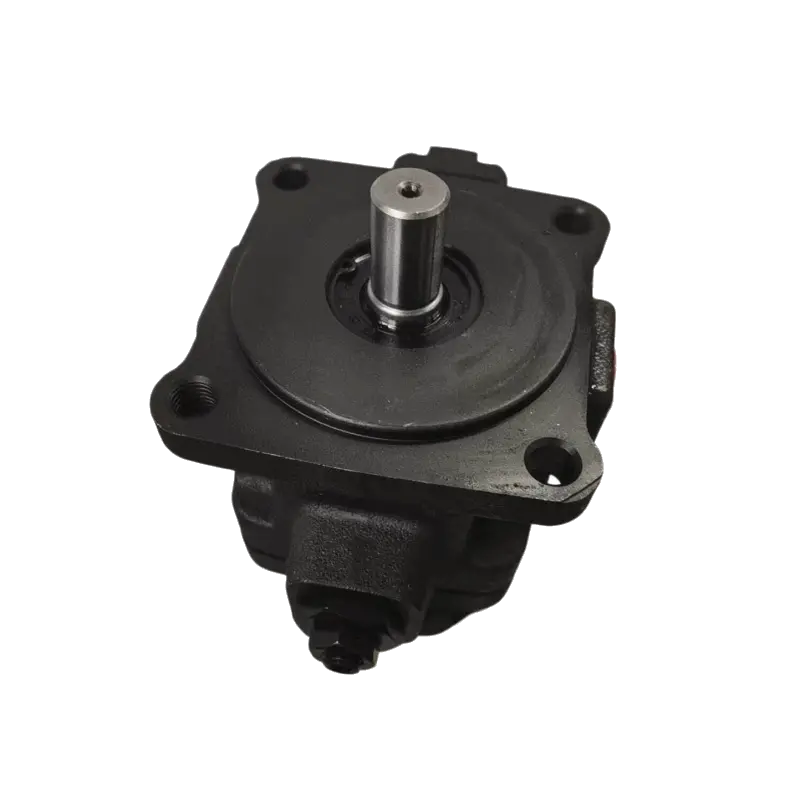
A vane pump may operate from relatively low transfer pressures to well above 100 bar in a hydraulic system, but there is no universal maximum pressure for every vane pump.
Liquid-transfer vane pumps commonly work at low to moderate differential pressures. Some designs have a maximum differential pressure of approximately 15 bar, or about 200 psi. Industrial hydraulic vane pumps often operate in a range of roughly 70 to 175 bar, while specialized units may have higher intermittent or peak ratings.
These values describe broad categories, not guaranteed specifications. The allowable continuous pressure must always be verified using the technical data for the exact pump construction.
What Determines Actual Flow and Pressure?
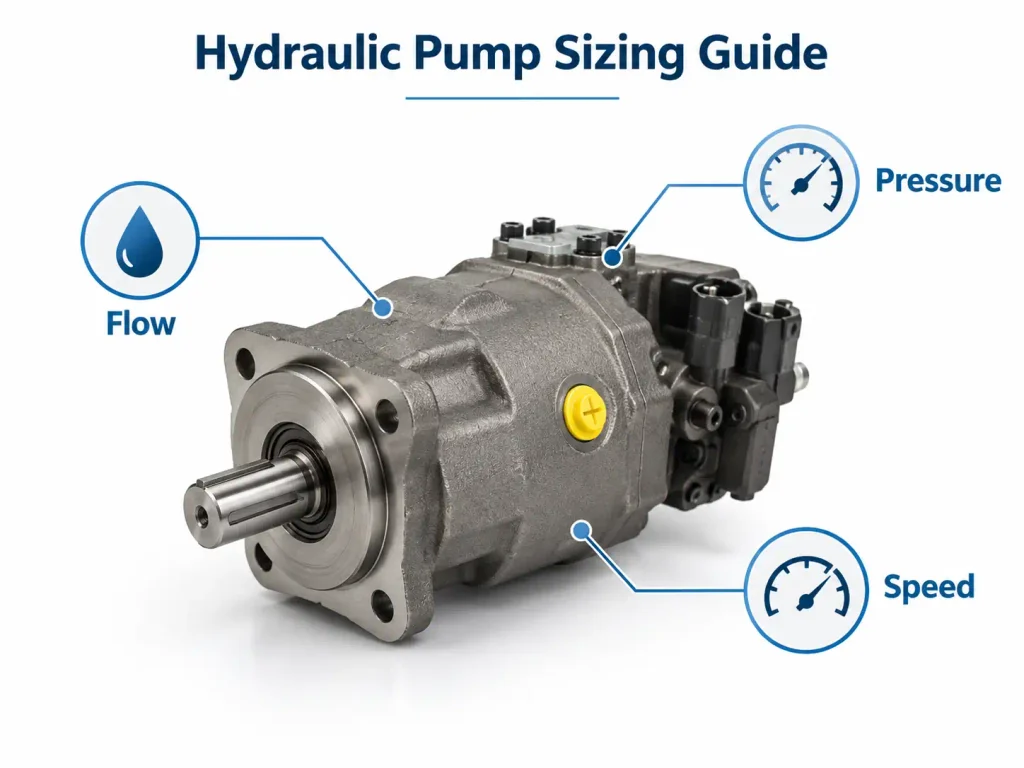
A positive displacement pump primarily generates flow. System resistance, actuator load, piping losses, and valve settings determine the pressure required to move that flow.
The approximate delivered flow can be expressed as:
Q = Vd × N × ηv
Where:
- Q is actual flow rate.
- Vd is displacement per revolution.
- N is rotational speed.
- ηv is volumetric efficiency.
Several conditions affect real performance:
- Internal leakage increases as clearances wear or pressure rises.
- Low-viscosity fluid may leak more easily across internal clearances.
- Excessively viscous fluid may not fill the inlet chambers quickly enough.
- Inadequate inlet pressure can cause cavitation.
- High speed can reduce filling efficiency.
- A relief valve set too low may divert flow before the required pressure is reached.
- Excessive outlet pressure can overload vanes, bearings, seals, and the drive motor.
The correct pump should therefore be selected using both flow and pressure requirements, including normal, peak, and startup conditions.
What Are the Advantages and Disadvantages of Vane Pumps?
Vane pumps provide smooth flow, compact construction, and good suction performance, but they require clean fluid, suitable lubrication, and controlled operating conditions.
The following comparison summarizes their main characteristics:
| Advantages | Disadvantages |
|---|---|
| Smooth, low-pulsation flow | Abrasive particles can damage vane tips and the cam ring |
| Good suction and priming characteristics | Tight internal clearances increase sensitivity to contamination |
| Compact power-to-size ratio | Many designs are unsuitable for very viscous fluids |
| Quiet operation compared with many gear pumps | Vanes, seals, and side plates are wear components |
| Vane extension can compensate for gradual wear | Construction may be more complex than a basic gear pump |
| Fixed and variable displacement options are available | Many designs have lower pressure capability than piston pumps |
| Effective with many low-viscosity liquids | Unsupported dry running can cause rapid damage |
A vane pump is usually a strong candidate when low noise, steady flow, compact installation, and moderate pressure are priorities. It may be a poor choice when the fluid contains hard abrasive particles or when extremely high pressure is required.
What Are Common Problems With Vane Pumps?
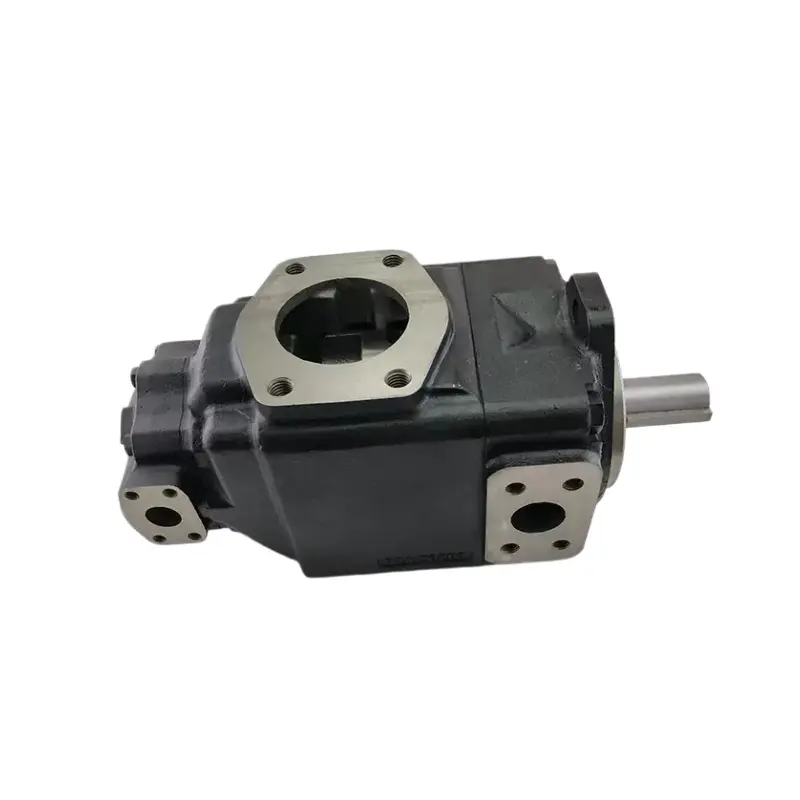
Common vane pump problems include loss of flow, inadequate pressure, noise, cavitation, overheating, external leakage, and vanes sticking in their slots.
Symptoms should be evaluated as part of the complete system. A pump that appears defective may actually be affected by a blocked inlet, unsuitable fluid, incorrect rotation, poor alignment, or an incorrectly adjusted valve.
| Symptom | Likely Causes | Recommended Checks |
|---|---|---|
| Low flow | Worn vanes, internal leakage, low speed, restricted inlet | Measure shaft speed, inlet condition, output flow, and internal wear |
| Low pressure | Relief valve opening early, excessive leakage, insufficient drive torque | Check valve setting, load, motor power, and pump condition |
| High-pitched noise | Cavitation, air ingress, excessive speed | Inspect suction line, filter, fluid level, and inlet pressure |
| Knocking or vibration | Coupling misalignment, damaged bearing, pressure ripple | Check mounting, alignment, shaft condition, and outlet restriction |
| Overheating | Dry running, excessive pressure, poor lubrication, internal friction | Check lubricant, temperature, pressure, and vane movement |
| Shaft leakage | Worn seal, bearing movement, shaft damage | Inspect seal surfaces, shaft runout, and bearing condition |
| Irregular delivery | Sticking vanes, contaminated fluid, air in the system | Examine fluid cleanliness and vane movement |
| Frequent wear | Abrasive particles, unsuitable viscosity, excessive speed | Review filtration, fluid specification, and duty cycle |
Cavitation deserves immediate attention. It occurs when local inlet pressure falls low enough for vapor bubbles to form and then collapse. This can produce noise, vibration, loss of flow, and erosion of internal surfaces.
How Long Does a Vane Pump Last?
A vane pump has no single standard lifespan because service life depends more on operating conditions and maintenance than on calendar age alone.
Duty cycle, pressure, speed, temperature, fluid cleanliness, viscosity, lubrication, alignment, and inlet conditions all affect wear. A continuously loaded industrial pump and an intermittently operated transfer pump cannot be compared using a single number of years or operating hours.
Maintenance records and condition measurements provide more useful information than a generic lifespan estimate. Important indicators include:
- Declining flow at the same speed and pressure
- Increasing case-drain or internal leakage
- Rising operating temperature
- Changes in sound or vibration
- Repeated seal leakage
- Metal or vane material in the fluid
- Longer priming time
- Inability to maintain pressure
Factors That Extend Service Life
To maximize vane pump life:
- Select a pump with adequate continuous-pressure and flow margins.
- Use fluid with the correct viscosity and chemical compatibility.
- Maintain the required fluid level and lubrication condition.
- Install appropriate inlet filtration without excessively restricting flow.
- Prevent air from entering the suction line.
- Keep inlet piping short and correctly sized where possible.
- Avoid operating above the approved speed.
- Use relief protection to prevent overload.
- Install low-level or dry-run protection when supply loss is possible.
- Inspect filters, vanes, seals, bearings, and lubricant at planned intervals.
- Investigate changes in temperature, noise, or performance promptly.
Condition-based maintenance can identify gradual wear before it becomes a sudden production failure.
Where Are Vane Pumps Commonly Used?
Vane pumps are commonly selected for applications requiring smooth delivery of clean, low- to medium-viscosity fluids at controlled flow and pressure.
Typical applications include:
- Industrial hydraulic power units
- Machine tools and material-handling equipment
- Fuel and light-oil transfer
- Lubrication and circulation systems
- Refrigerant and compatible chemical transfer
- Mobile hydraulic systems
- Vacuum packaging and evacuation equipment
- Process gas and laboratory vacuum systems
- Loading and unloading tanks or transport vessels
The required vane construction varies between these applications. A hydraulic oil pump, flexible vane liquid pump, and rotary vane vacuum pump may share a geometric principle but are not interchangeable.
How Do You Select the Right Vane Pump?
The correct vane pump must match the required flow, continuous pressure, fluid properties, inlet conditions, duty cycle, and maintenance environment.
Before choosing a pump, define:
- Required normal and maximum flow
- Continuous, peak, and startup pressure
- Fluid viscosity across the full temperature range
- Chemical compatibility with vanes and seals
- Lubricity of the pumped medium
- Particle size and contamination level
- Available inlet pressure and suction height
- Normal and maximum shaft speed
- Continuous or intermittent duty cycle
- Expected dry-running exposure
- Fixed or variable flow requirements
- Filtration and maintenance accessibility
Selection should be based on the complete operating envelope rather than a single nominal flow value. Adequate safety margins, clean fluid, reliable inlet conditions, and suitable protection devices are often more important to long-term performance than maximum catalogue ratings.
Frequently Asked Questions
Is a vane pump self-priming?
Many vane pumps have good self-priming capability because expanding chambers create a strong inlet pressure differential and close vane contact limits internal leakage. However, priming height, rotational speed, fluid vapor pressure, piping resistance, and whether the pump starts wet or dry all affect performance. Self-priming capability must be confirmed for the specific model and installation.
Is a vane pump better than a gear pump?
Neither design is universally better. A vane pump is often preferred for quieter operation, smoother flow, and variable displacement. A gear pump may be simpler, less expensive, and more tolerant of certain contamination or viscosity conditions. The correct choice depends on pressure, noise, fluid cleanliness, efficiency, cost, and maintenance requirements.
Can a vane pump handle solids or abrasive fluids?
Some flexible or external vane designs can handle limited soft solids, but most sliding vane pumps perform best with clean fluid. Hard abrasive particles can score the cam ring, wear vane tips, block rotor slots, and increase internal leakage. Applications containing solids require a compatible pump design, controlled speed, and appropriate filtration.