Reusing an existing hydraulic pump to drive rotating equipment can look like a practical way to reduce purchasing costs. For maintenance teams and equipment builders, however, the real question is whether that unit can deliver the required torque and speed reliably.
Yes, some hydraulic pumps can operate as hydraulic motors, but suitability depends on their design and configuration. Units designed for both functions can support either application within their specified limits. A pump intended only for pumping should not be treated as a motor without manufacturer confirmation.
Understanding the differences, compatibility checks, and power requirements will help you evaluate whether reuse makes sense.
What Is the Difference Between a Hydraulic Pump and a Hydraulic Motor?
A hydraulic pump converts mechanical power into hydraulic power, while a hydraulic motor converts hydraulic power into shaft rotation and torque. Their energy conversion functions are opposite, but their construction is not necessarily interchangeable.
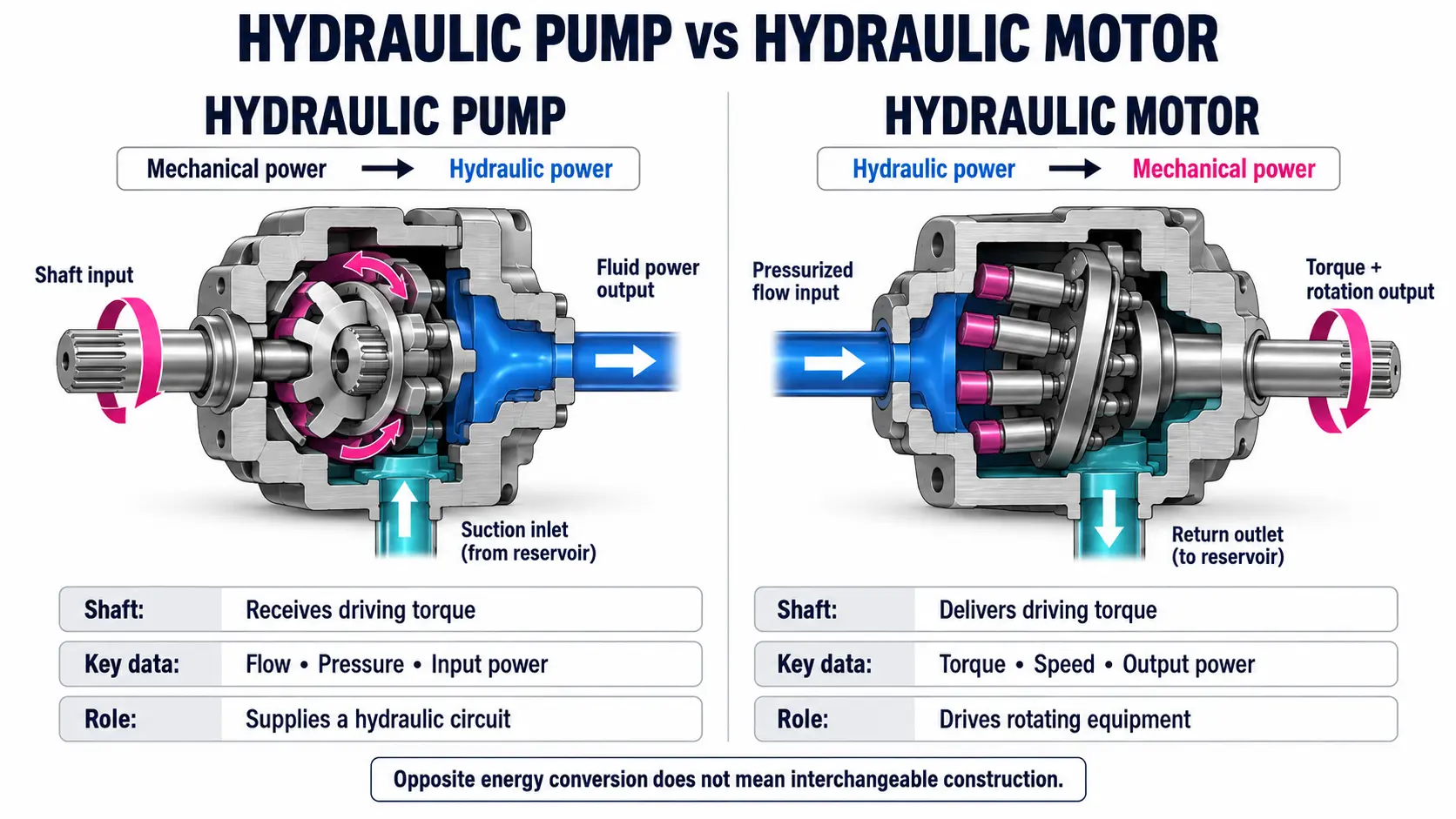
The distinction becomes clearer when comparing their inputs and outputs:
| Feature | Hydraulic pump | Hydraulic motor |
|---|---|---|
| Power input | Rotating shaft | Pressurized fluid flow |
| Power output | Hydraulic fluid power | Mechanical shaft power |
| Shaft function | Receives driving torque | Delivers driving torque |
| Key performance data | Flow, pressure, input power | Torque, speed, output power |
| Typical role | Supplies a hydraulic circuit | Drives rotating equipment |
A pump produces flow. Pressure develops as that flow encounters resistance from the load and circuit. A motor uses the pressure difference across its ports to develop torque, while flow and displacement largely determine speed.
Can a pump be called a motor? Only when discussing a unit operating in a suitable motor mode. Similar housings, shafts, or internal components do not establish that capability. The approved operating function and specifications remain the deciding factors.
Which Hydraulic Pumps Can Operate as Motors?
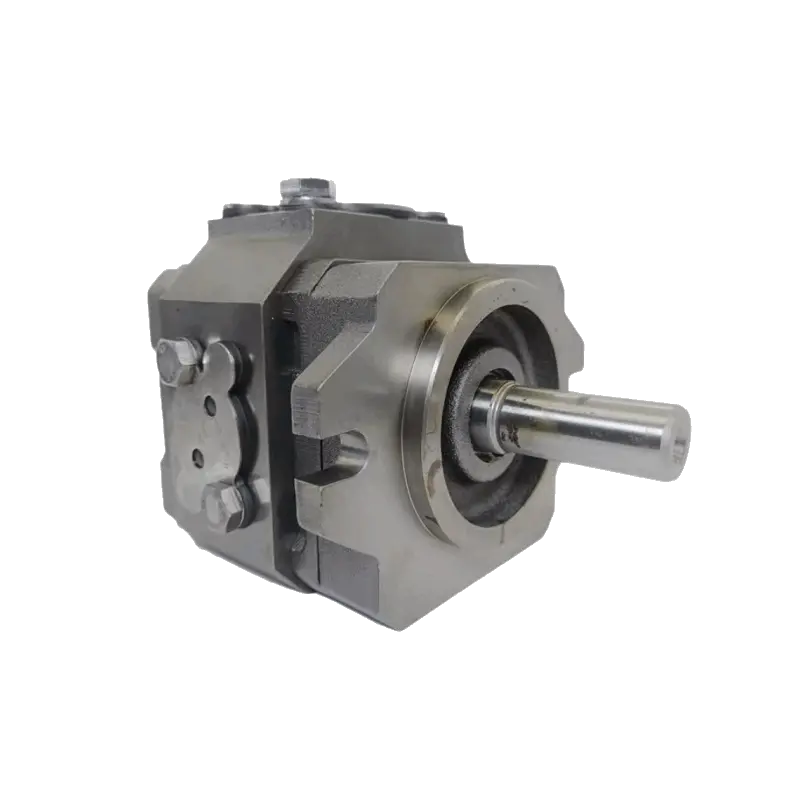
Some positive displacement pumps can perform motor operation, particularly designs specified for both functions. However, identifying a unit as a gear, piston, or vane pump does not establish whether its particular configuration is suitable.
Gear Pumps
Gear pumps and gear motors share a basic mechanism: fluid interacts with meshing gears inside a housing. This similarity makes conversion appear straightforward.
The important differences can involve pressure balancing, bearing lubrication, internal leakage paths, and shaft seal protection. A passage connected to the low pressure side during pumping may experience different conditions during motor operation.
Check the exact model documentation. Swapping hoses does not prove that the seals, bearings, or pressure compensation arrangement can tolerate the new duty.
Piston Pumps
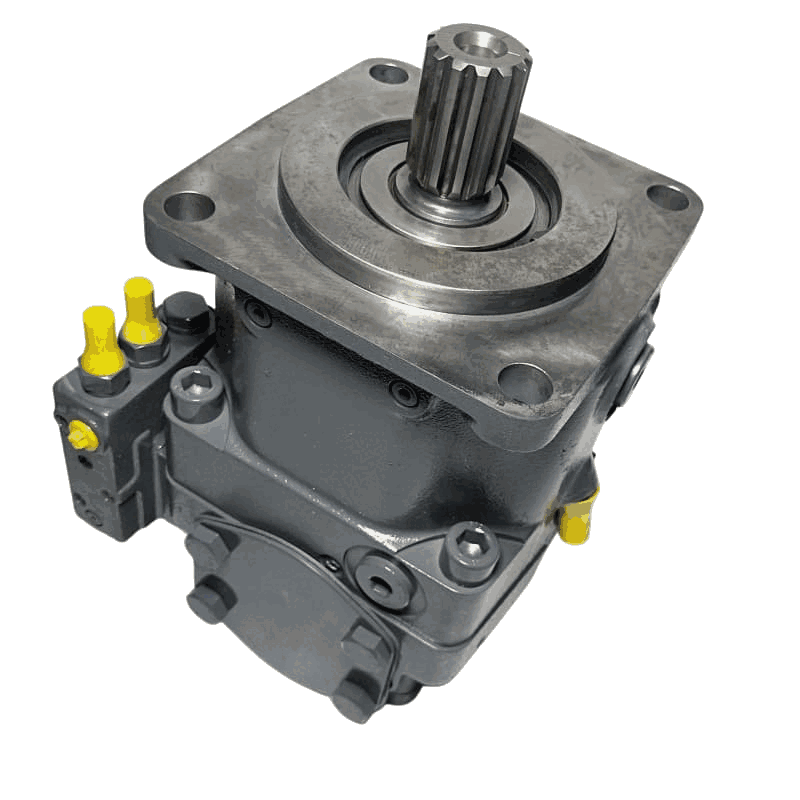
Certain piston units are designed for pump and motor applications. Their documentation may specify separate operating limits or configurations for each function.
That capability should not be extended to every piston pump. Port timing, lubrication, displacement controls, and allowable case pressure can affect suitability. A pressure compensated pump, for example, needs its control behavior evaluated before it is considered for another operating function.
Confirm the complete configuration, including controls and rotation, rather than relying on the product family alone.
Vane Pumps
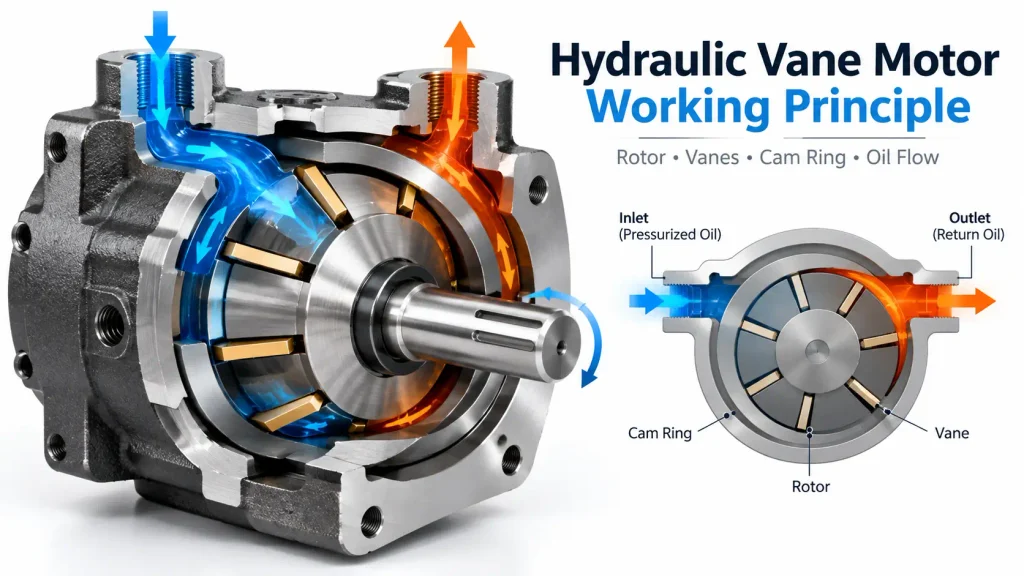
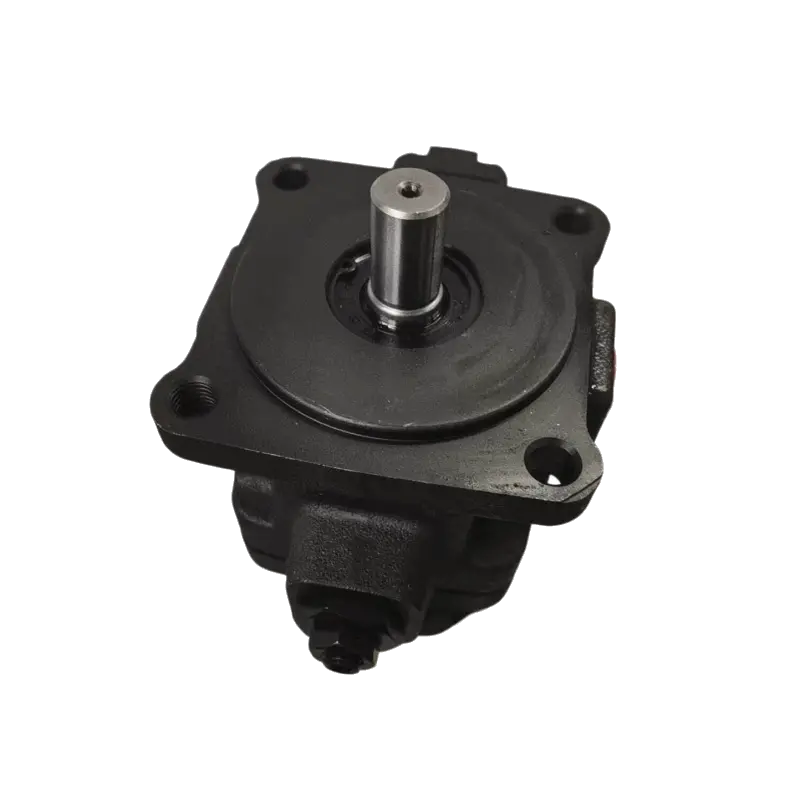
Vane designs require particular attention to how the vanes maintain contact with the cam ring, especially during startup.
A vane pump that works properly when mechanically driven may not develop dependable starting torque when supplied with pressurized fluid. Motor designs address the requirements of starting and running under hydraulic power.
Unless documentation explicitly supports motor use, treat a standard vane pump as unsuitable for direct substitution.
What Must You Check Before Using a Pump as a Motor?
Verify motor compatibility, pressure limits, starting performance, shaft loading, and circuit requirements before selecting a hydraulic pump for motor duty. A shaft turning during a brief test does not establish reliable operation under load.
Port Ratings, Shaft Seals, and Case Drain
Check each pressure limit separately. The working port rating does not automatically apply to the shaft seal or housing.
| Check | Why it matters |
|---|---|
| Working port pressure | Establishes permitted operating pressure |
| Return pressure | Determines acceptable outlet backpressure |
| Case pressure | Protects housing seals and internal conditions |
| Drain arrangement | Provides the required path for internal leakage |
| Rotation and port assignment | Establishes permitted connections and direction |
Drain requirements vary by design. Some gear motor specifications identify internal drainage with bidirectional check arrangements. Other configurations require an external drain. Follow the exact unit’s instructions instead of assuming every motor needs the same plumbing.
Starting Torque, Speed, and Shaft Loads
Starting a stationary load may demand more torque than keeping it moving. Running performance alone therefore cannot establish whether the unit will start a conveyor, mixer, or other loaded mechanism.
Request starting torque data and the permitted continuous speed range. Displacement and pressure difference influence torque; flow, displacement, and leakage influence speed. Actual performance also depends on operating conditions and efficiency.
Check shaft loads separately. A belt, chain, or direct mounted gear can introduce radial forces, while some couplings transmit axial loads. Confirm that the shaft and bearings can accommodate the intended arrangement.
Rotation, Lubrication, and Circuit Compatibility
Confirm the permitted direction of rotation and associated port connections. Bidirectional pumping capability does not automatically establish suitability for bidirectional motor duty.
Review fluid viscosity, temperature, filtration, lubrication, and any required makeup flow. Loads that drive the motor during deceleration can create conditions requiring additional circuit provisions.
The evaluation should cover the complete operating cycle, including starting, stopping, reversing, and continuous running.
How Much Horsepower Does It Take to Run a Hydraulic Pump?
The horsepower needed to drive a hydraulic pump depends on pressure rise, delivered flow, and overall pump efficiency. Higher pressure or flow increases the requirement, while efficiency losses increase the shaft power needed to produce that hydraulic output.
Calculate Pump Input Power
Use the following relationship from standard hydraulic power equations:
Pump input horsepower = Pressure rise × Flow ÷ (1714 × Overall efficiency)
Pressure is in psi, flow is in US gallons per minute, and efficiency is expressed as a decimal.
For example, assume:
- Pressure rise: 2,000 psi
- Delivered flow: 10 US gpm
- Overall pump efficiency: 0.85
Required shaft power = 2,000 × 10 ÷ (1714 × 0.85) = approximately 13.7 hp.
In metric units:
Pump input kW = Pressure rise in bar × Flow in L/min ÷ (600 × Overall efficiency)
The assumed efficiency is illustrative. Final drive selection should consider actual performance data, starting conditions, peak demand, and duty cycle.
Distinguish Pump Input from Motor Output
A hydraulic motor’s shaft output is lower than the hydraulic power entering it because of losses.
Motor output horsepower = Pressure drop × Inlet flow × Overall efficiency ÷ 1714
For the motor, use the pressure difference between inlet and outlet. Return backpressure reduces that difference. Do not use the pump’s input horsepower calculation as the motor’s available shaft output.
When Should You Choose a Dedicated Hydraulic Motor?
Choose a dedicated hydraulic motor when the existing pump lacks confirmed motor ratings or cannot meet the application’s starting torque, speed, pressure, and service requirements. Compare documented performance and total operating cost before deciding.
The following framework can help narrow the choice:
| Available option | Selection approach |
|---|---|
| Unit documented for pump and motor use | Verify configuration and motor operating limits |
| Existing pump with no motor documentation | Obtain manufacturer confirmation before reuse |
| Dedicated hydraulic motor | Match published performance to the load and circuit |
Frequent starts, low speed operation, reversing duty, and extended running make dependable performance data particularly valuable.
Reusing a pump can also introduce costs for adapters, controls, plumbing changes, testing, and maintenance. Compare these with the cost of a motor already suited to the application.
For a useful supplier assessment, provide the required starting and running torque, target speed, available pressure and flow, duty cycle, and mounting dimensions. Include shaft loading and rotation requirements. These details support a technically meaningful recommendation rather than a comparison based only on displacement or purchase price.
FAQ
Can a Hydraulic Pump Used as a Motor Drive a Generator?
A unit approved for motor operation can potentially drive a generator if its torque, speed, shaft connection, and continuous power rating match the generator’s requirements. The hydraulic supply must provide sufficient power after losses, and speed control must meet the electrical application’s needs.
Can a Hydraulic Pump and Motor Power Each Other Indefinitely?
No. A coupled pump and motor system loses energy through leakage, friction, fluid resistance, and heat. Without an external power source, it will slow down and stop. Returning the motor’s shaft output to the pump cannot replace all the energy consumed.
Can Displacement Alone Determine the Right Hydraulic Motor?
No. Equal displacement does not guarantee equal starting torque, efficiency, permissible pressure, speed range, or bearing capacity. Compare performance curves and continuous ratings under the intended operating conditions. Installation dimensions matter, but matching the mounting flange and shaft is only part of the selection.